There is no question: the best things about Jim Cymbala's books are always the testimonies he includes from his own church members. It is so encouraging and uplifting to hear how God saved these people, and how He is using them to reach others! It reminds me that God can save anyone that comes to Him. He can not only save them, He can use them powerfully.
The book addresses the current weak state of the American church, in particular. And it is a pretty bleak picture. Frankly, it may even be worse than what Jim Cymbala describes....
We have a church culture that relies heavily on man-centered programming, man-centered scheduling, man-centered music, man-centered teaching and preaching, man-centered application, man-centered prayers (or prayerlessness), and man-centered service. Is it any wonder there is a lack of the power of God?
I appreciate Pastor Cymbala's attempts at addressing this topic. He gives a fairly level-headed and balanced view. However, much of the book felt to me as though it were forced together, and did not flow easily. He seemed more intent on making the chapter titles fit the "storm" theme than making them work in cohesion. The subjects he covers are all important; but I feel as though they didn't work together to form a powerful statement on his main issue.
The book is not long, and is worth a read. It is, however, not the best book on the subject - and is DEFINITELY not Pastor Cymbala's best book. (That distinction would go to "Fresh Wind, Fresh Fire," in my opinion.)
I give it 3 out of 5 stars.
Showing posts with label Christian Living. Show all posts
Sunday, January 4, 2015
Saturday, April 12, 2014
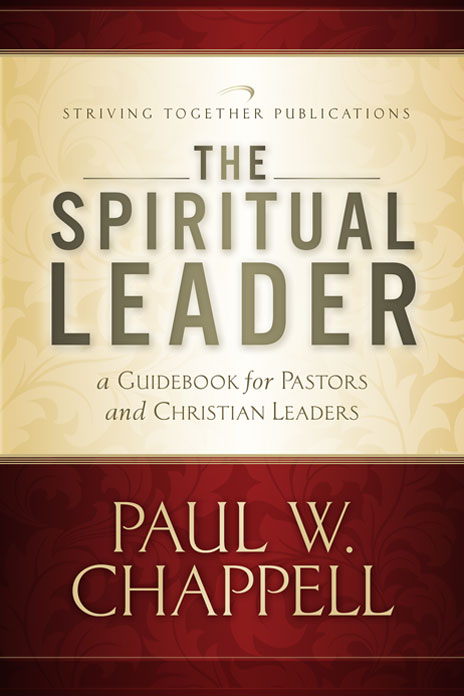
"The Spiritual Leader" by Paul Chappell

From Pastor Paul Chappell comes a very heart-felt book about some of the nuts-and-bolts of ministry. While he is writing as a pastor - and mainly TO pastors - he touches on very broad philosophies and management principles that would be applicable to a wide range of ministry leaders.
The chapters are very short and manageable. I read the entire book by reading one chapter each night before I went to sleep. Everything from the ministry team, to the minister's family, to the minister's time management is covered here. And I believe that these lessons come from a man who has tried to humbly and passionately serve the Lord.
Pastor Chappell saturates his writing with Scripture, which is crucially important. I remember recently watching a webinar (or something like that) with two pastors of large Baptist churches in Florida. For about an hour I listened to each of them talking about "leadership" principles and church management. They never quoted a Scripture. They never talked about the power of the Word of God, or the necessity of being a Spirit-filled pastor. It was quite discouraging to see how the wisdom of men creeps into the church and drowns out the voice of the Word of God. Pastor Chappell makes no such omissions.
The Biblical advice in this book should encourage any pastor, and give them some solid ideas, principles, and guidelines for a healthy, God-centered, and Spirit-led ministry.
(This book is available from Striving Together Publications - www.strivingtogether.com)
Labels:
Christian Living,
Ministry,
Non-fiction,
Pastoral,
Paul Chappell
Monday, May 20, 2013
"Firsthand" by Ryan and Josh Shook
Well, it has been quite a while since I reviewed any books! Since I've had such a long break, I'm not sure whether to write a whole bunch, or to cut to the chase....
This book is targeted to a very specific audience: the young people that evacuate the church sometime after their magic 18th birthday. (We've all heard the statistics...) The theory postulated by the authors (themselves young adults) is that the reason these young people are leaving the church is that they have only managed to procure an "inherited faith" from their parents, Sunday School teachers, etc. Therefore, they are starting on a shaky foundation. Christianity isn't real to them because it is just spoon-fed information that they assume to be true. The authors sort of diagnose this problem (using real life examples from a study survey they did... I was one of the people surveyed! Cool, huh?); then they set about to show young "disillusioned" Christians how to rectify it.
I applaud the authors for attempting to tackle an apparently large problem in the church. Their passion for seeing young people become dedicated Christ-followers is truly commendable. But to be honest, I struggled to read this book. It was downright boring and cliche. The writing style was pretty weak, but the content itself left a lot to be desired.
First and foremost, I felt that the authors failed to make the case that their theory was valid. Sure, they had lots of testimonies from people about how they never had "their own" faith... But that doesn't prove anything. There was only a small amount of outside research referenced in the beginning of the book. This gave me the feeling that they were fabricating a PROBLEM to fit the SOLUTION they had already decided upon. (I'm not accusing them of dishonesty - I'm just saying that's the feeling I got from reading the book).
Secondly, their remedy for the problem is overly simplistic. Again, not a lot of outside sources referenced... Just a kind of made-up list of stuff from Ryan and Josh Shook that will supposedly help the disillusioned young adults.... I'm seriously not trying to mock them, but why should we take their word for it? They failed to give us any reason to trust them (other than their own experiences). Not only that, but they didn't use very many Scripture references (in my opinion). A book like this should be chock-full of Bible verses.
In spite of the fact that !!!!I myself am quoted in this book!!!! (seriously... at the end of the chapter called "Question Everything." It says, "John from Spring Lake, North Carolina" - they used one of my survey answers!); the book didn't really speak to me at all.
I'm not trying to be a killjoy - I hope some young people read this book and it makes the difference in their lives between being a "former believer" and a committed Christian. That would be amazing. I'm just saying, the book was disappointing to me. So, I'd have to give it half a star (because they quoted me). :o)
This book is targeted to a very specific audience: the young people that evacuate the church sometime after their magic 18th birthday. (We've all heard the statistics...) The theory postulated by the authors (themselves young adults) is that the reason these young people are leaving the church is that they have only managed to procure an "inherited faith" from their parents, Sunday School teachers, etc. Therefore, they are starting on a shaky foundation. Christianity isn't real to them because it is just spoon-fed information that they assume to be true. The authors sort of diagnose this problem (using real life examples from a study survey they did... I was one of the people surveyed! Cool, huh?); then they set about to show young "disillusioned" Christians how to rectify it.
I applaud the authors for attempting to tackle an apparently large problem in the church. Their passion for seeing young people become dedicated Christ-followers is truly commendable. But to be honest, I struggled to read this book. It was downright boring and cliche. The writing style was pretty weak, but the content itself left a lot to be desired.
First and foremost, I felt that the authors failed to make the case that their theory was valid. Sure, they had lots of testimonies from people about how they never had "their own" faith... But that doesn't prove anything. There was only a small amount of outside research referenced in the beginning of the book. This gave me the feeling that they were fabricating a PROBLEM to fit the SOLUTION they had already decided upon. (I'm not accusing them of dishonesty - I'm just saying that's the feeling I got from reading the book).
Secondly, their remedy for the problem is overly simplistic. Again, not a lot of outside sources referenced... Just a kind of made-up list of stuff from Ryan and Josh Shook that will supposedly help the disillusioned young adults.... I'm seriously not trying to mock them, but why should we take their word for it? They failed to give us any reason to trust them (other than their own experiences). Not only that, but they didn't use very many Scripture references (in my opinion). A book like this should be chock-full of Bible verses.
In spite of the fact that !!!!I myself am quoted in this book!!!! (seriously... at the end of the chapter called "Question Everything." It says, "John from Spring Lake, North Carolina" - they used one of my survey answers!); the book didn't really speak to me at all.
I'm not trying to be a killjoy - I hope some young people read this book and it makes the difference in their lives between being a "former believer" and a committed Christian. That would be amazing. I'm just saying, the book was disappointing to me. So, I'd have to give it half a star (because they quoted me). :o)
Labels:
Christian Living,
Josh Shook,
Non-fiction,
Ryan Shook,
Young Adult
Thursday, October 4, 2012
"Not a Fan" by Kyle Idleman
The message of "Not a Fan" is extremely important, and it is also terrifyingly relevant for today's church. The independent fundamental Baptists that I have listened to for the past couple of decades have been saying for years that there are "imposters" in the church - those who are not truly followers of Christ. This epidemic has been around since, well, Jesus' days. But the danger for the 21st-century church is that we are not only tolerating fans (or hypocrites, or false converts, or whatever you wish to call them), we are PRODUCING them at an alarming pace. Our discipleship success rate is almost nonexistent. We have dressed up Christianity as an attractive consumer package, and we are reaping the consequences of an "easy-believe-ism" without the commitment of the heart that should accompany salvation. (For the record, I believe salvation is as simple as "Believe on the Lord Jesus Christ and thou shalt be saved..." I'm not trying to add to the Gospel. Please understand the context of what I'm saying.)
That being said, this book is one of the must-reads I have reviewed so far on my blog. However, that does not mean there weren't a few minor pitfalls with the book. (I know, I know... I'm so picky)
The main thing is that I felt like the message could have been conveyed just as effectively in a 50-page booklet, whereas we are presented with a semi-redundant 200+ page book. There comes a time when I am reading books like these where the main point has been clearly made, but I feel obligated to finish the book - even though I doubt the author will present anything really fresh in the last 50-75 pages. (This book could have been a lot shorter, BUT I will say that the last three chapters were the most powerful in my opinion)
By the way, the book is written on a very accessible level for readers. As one of our church men who read the book said to me recently, it is written on about a 7th grade level - all in all, not a bad thing. It just means that there are no deep Greek expositions, complex thought progressions, or logical syllogisms (which I actually happen to love).
The other thing that bothered me was the author's use of humor and jokes. He (graciously) relegated most of his cheesy-ness to footnotes at the bottom of the page; so for a better reading of the book, I recommend skipping the footnotes altogether.... Seriously... Don't even look down there at them. Here the author has this incredible message that is as serious as Heaven and Hell (literally, if he's right about the fans being unsaved), and he sprinkles in some lame wisecracks every now and then. To me, that severely disrupted his momentum and decreased his effectiveness in communicating his message.
I hope this book (among others) will help foster a desire for true discipleship in our churches.
The message is a definite 5 star, but I can't rate the book itself any more than 4 out of 5.
That being said, this book is one of the must-reads I have reviewed so far on my blog. However, that does not mean there weren't a few minor pitfalls with the book. (I know, I know... I'm so picky)
The main thing is that I felt like the message could have been conveyed just as effectively in a 50-page booklet, whereas we are presented with a semi-redundant 200+ page book. There comes a time when I am reading books like these where the main point has been clearly made, but I feel obligated to finish the book - even though I doubt the author will present anything really fresh in the last 50-75 pages. (This book could have been a lot shorter, BUT I will say that the last three chapters were the most powerful in my opinion)
By the way, the book is written on a very accessible level for readers. As one of our church men who read the book said to me recently, it is written on about a 7th grade level - all in all, not a bad thing. It just means that there are no deep Greek expositions, complex thought progressions, or logical syllogisms (which I actually happen to love).
The other thing that bothered me was the author's use of humor and jokes. He (graciously) relegated most of his cheesy-ness to footnotes at the bottom of the page; so for a better reading of the book, I recommend skipping the footnotes altogether.... Seriously... Don't even look down there at them. Here the author has this incredible message that is as serious as Heaven and Hell (literally, if he's right about the fans being unsaved), and he sprinkles in some lame wisecracks every now and then. To me, that severely disrupted his momentum and decreased his effectiveness in communicating his message.
I hope this book (among others) will help foster a desire for true discipleship in our churches.
The message is a definite 5 star, but I can't rate the book itself any more than 4 out of 5.
Saturday, September 15, 2012
"Dreams and Visions" by Tom Doyle
I had read a little bit about this subject before starting this book. The subtitle of this book is a question: "Is Jesus Awakening the Muslim World?" And I would have to say, after reading the stories in these pages, that God is surely doing something in the Middle East to bring revival.
Tom Doyle's book is, first of all, written from the heart of a missionary. He has been in these hard-to-reach places, he has talked with most of the people whose stories appear in his book, he has a burden for the Muslim world - in short, he writes this book with love, not just with the bland fact-giving tone of many books with biographical content. And there are many stories to be told, apparently.
Each of the people whose stories are told in the book have reported seeing Jesus in either a dream or vision. They all seem to know who He is immediately upon seeing Him. Sometimes two different people have the same dream, or a Muslim will have a dream where Jesus shows them a building they must find. When they wake up, they find the building and meet the people who live there (Christians, of course, who are able to lead the person to the Lord).
It is impossible to read stories of these Christians in the Middle East without being simultaneously repulsed by the persecution and torture they endure and encouraged by the strength of their faith. In the excellent Appendices in the back of the book, Doyle answers the question easily: "How do you know the dreams and visions are of God?" He makes two strong statements: Point #1 - No one goes to sleep a Muslim and wakes up a believer in Christ. Without fail, the dreams only point the dreamer to a person who shares the Word of God with them. For some, it only takes a dream or two - others have had many dreams over the span of many months. Some of the dreamers written about in the book have not yet received Christ at the time of the book's printing (and Doyle asks us to pray that they do). It appears that Jesus is not violating the Scripture that says "Faith cometh by hearing, and hearing by the Word of God."
Big point #2 - Look at the fruit of the dreams and visions. These dreams produce seekers of Christ, who become disciples of Christ who are willing to die for their faith (a very likely reality for most of them). Not only that, but when they accept Christ they are so deeply changed by Jesus that they cannot help but share the Gospel with others.
The chapters of the book are divided into sections by country: Egypt, Pakistan, Iraq, Iran, Syria, Saudi Arabia, and even Israel and America. I really appreciated how the author gave a brief historical background of the countries and the Muslim groups that have become dominant there. It helps create a clearer picture in my mind of the context of the stories.
Do I believe these dreams and visions are from God? I can honestly say that I hope so. And it certainly appears to be so. I HIGHLY recommend this book.
What is your opinion of this information? Do you believe God would use dreams and visions to reach a group of people that are nearly impossible to reach by conventional methods? PLEASE LEAVE A COMMENT OR DROP ME AN EMAIL AND GIVE ME YOUR THOUGHTS!
Also, don't forget the book giveaway list! I have given out 7 or so, but there are plenty more!
I received this book free from the publishers in exchange for my honest review.
Labels:
Biography,
Christian Living,
Middle East,
Missionary,
Tom Doyle
Tuesday, August 28, 2012
"The Power of the Prophetic Blessing" by John Hagee
John Hagee presents a quite frustrating but fascinating read with his new book "The Power of the Prophetic Blessing." I have always admired John Hagee's preaching - he speaks with great conviction and power. I have also learned so much from his writings about the nation of Israel. (His book "Jerusalem Countdown" is a great example... read my review here).
Let me begin with the positive aspects of the book. I really enjoyed his discussion of the nature of the blessings of the Old Testament - particularly, of Jacob blessing the sons who would become the fathers of the 12 tribes of Israel. There is also the great section talking about the power of affirmation through touch in a child's life and development. Those two sections alone are worth the price of the book, in my opinion. Then, Hagee forcefully reminds fathers (and mothers, but fathers especially) about their role as spiritual authority in the home - and of the overwhelming need to pray over our wives and children. This is a much needed message for the church today.
The negative aspect of the book is one that I had feared from the start. Hagee goes beyond the bounds of God's intention when he claims that we can speak our own prosperity into existence. With all the strong words Jesus had to say against materialism and with all the warnings God gives against money and the love of worldly things, I am quite sure that the blessings God has for his children are not primarily of a materialistic nature. It is not wrong to think that unexpected material blessing comes from God, but it is wrong to imagine that there is no way God can bless you other than to give you prosperity, promotion, wealth, riches, and even health and right relationships - all of which Hagee points out repeatedly in his book. I would imagine God's greatest blessing to man would be a more accurate understanding of God Himself - which he gave to Job, but only after Job had LOST all material blessings, wealth, health, and even relationships.
I would say that, to the wise reader who can avoid the pitfall of the prosperity teachings, this book can be an informative tool. My wife and I have already talked about some of the things I learned in it, and we are going to try to follow God's Word more accurately when it comes to praying for each other.
My fear is that weak or easily misled believers will get one thing only out of this book: if I believe hard enough, God will give me a new car and heal my cancer. There is nothing wrong with praying for either one of these things, but what will become of the man to whom God refuses to bless in this way? Will he become angry at God? Will he cease to pray, assuming that it is of no value because his prayers weren't answered?
I still give it a 3 out of 5 stars for all its positive points - but read with discernment.
I received this book free from Handlebar Marketing in exchange for my honest review.
Let me begin with the positive aspects of the book. I really enjoyed his discussion of the nature of the blessings of the Old Testament - particularly, of Jacob blessing the sons who would become the fathers of the 12 tribes of Israel. There is also the great section talking about the power of affirmation through touch in a child's life and development. Those two sections alone are worth the price of the book, in my opinion. Then, Hagee forcefully reminds fathers (and mothers, but fathers especially) about their role as spiritual authority in the home - and of the overwhelming need to pray over our wives and children. This is a much needed message for the church today.
The negative aspect of the book is one that I had feared from the start. Hagee goes beyond the bounds of God's intention when he claims that we can speak our own prosperity into existence. With all the strong words Jesus had to say against materialism and with all the warnings God gives against money and the love of worldly things, I am quite sure that the blessings God has for his children are not primarily of a materialistic nature. It is not wrong to think that unexpected material blessing comes from God, but it is wrong to imagine that there is no way God can bless you other than to give you prosperity, promotion, wealth, riches, and even health and right relationships - all of which Hagee points out repeatedly in his book. I would imagine God's greatest blessing to man would be a more accurate understanding of God Himself - which he gave to Job, but only after Job had LOST all material blessings, wealth, health, and even relationships.
I would say that, to the wise reader who can avoid the pitfall of the prosperity teachings, this book can be an informative tool. My wife and I have already talked about some of the things I learned in it, and we are going to try to follow God's Word more accurately when it comes to praying for each other.
My fear is that weak or easily misled believers will get one thing only out of this book: if I believe hard enough, God will give me a new car and heal my cancer. There is nothing wrong with praying for either one of these things, but what will become of the man to whom God refuses to bless in this way? Will he become angry at God? Will he cease to pray, assuming that it is of no value because his prayers weren't answered?
I still give it a 3 out of 5 stars for all its positive points - but read with discernment.
I received this book free from Handlebar Marketing in exchange for my honest review.
Tuesday, August 7, 2012
"Has Christianity Failed You?" by Ravi Zacharias
I have the utmost respect for Ravi Zacharias, as an author, as a speaker, as an apologist, and as a Christian. He quickly cuts to the heart of the matter at hand - right down to where feelings and emotion interact with knowledge and doctrine. He is not afraid of tough topics. So, it is no surprise that he wrote a book such as this one.
Let me say up front: this book is NOT about the times you don't feel like a Christian, or about the times when you wonder why you should care so much or try so hard to be like Christ. For those types of issues, I would more recommend the writings of Philip Yancey - such as "Disappointment with God". No, this book is about the genuine questions about the toughest issues concerning Christianity. What is Christianity? What is a Christian? How can I reconcile the existence of God with the evil and suffering I experience? Why doesn't God answer my prayers?
With his characteristic eloquence, Zacharias presents a solid case for Christianity - it contains paradoxes, yes. There are things that we don't fully understand - of course! That's to be expected really. But Christianity stands up to even the toughest questions, because it is founded upon truth. Paradoxes are not the same as contradictions. Unanswered questions do not mean there is no God to converse with. And prayer DOES have meaning and purpose.
One of the more intriguing sections of the book deals with the issue of sexual purity. Ravi Zacharias tackles the issue of single-ness and the allure of sex outside of marriage. I thought the author did an absolutely masterful job of explaining the purpose of sex in marriage, and how God gives both the gift of sex and the grace for purity. Any single Christians would do well to read and ponder these words.
The chapter on prayer was another excellent section. Really, there were no "bad" sections at all. Some of the points made can be found in other books by Ravi Zacharias, but this book is constructed to flow in a certain manner and to address certain points that are not addressed in his other books. For that reason (among many others), this book deserves to be in the library of every Christian and honest thinker.
Let me say up front: this book is NOT about the times you don't feel like a Christian, or about the times when you wonder why you should care so much or try so hard to be like Christ. For those types of issues, I would more recommend the writings of Philip Yancey - such as "Disappointment with God". No, this book is about the genuine questions about the toughest issues concerning Christianity. What is Christianity? What is a Christian? How can I reconcile the existence of God with the evil and suffering I experience? Why doesn't God answer my prayers?
With his characteristic eloquence, Zacharias presents a solid case for Christianity - it contains paradoxes, yes. There are things that we don't fully understand - of course! That's to be expected really. But Christianity stands up to even the toughest questions, because it is founded upon truth. Paradoxes are not the same as contradictions. Unanswered questions do not mean there is no God to converse with. And prayer DOES have meaning and purpose.
One of the more intriguing sections of the book deals with the issue of sexual purity. Ravi Zacharias tackles the issue of single-ness and the allure of sex outside of marriage. I thought the author did an absolutely masterful job of explaining the purpose of sex in marriage, and how God gives both the gift of sex and the grace for purity. Any single Christians would do well to read and ponder these words.
The chapter on prayer was another excellent section. Really, there were no "bad" sections at all. Some of the points made can be found in other books by Ravi Zacharias, but this book is constructed to flow in a certain manner and to address certain points that are not addressed in his other books. For that reason (among many others), this book deserves to be in the library of every Christian and honest thinker.
Monday, July 30, 2012
"God is More than Enough" by Tony Evans
I love to hear Tony Evans preach. I had the opportunity to hear him in person at the Pastor's Conference at First Baptist in Jacksonville, Florida a couple of years ago. And, of course, I've heard him many times on the radio. But this is the first Tony Evans book that I've read. His greatest strength in preaching is also his greatest strength in writing: the ability to illustrate great truths in a simple and understandable way. No doubt about it, the illustrations and stories are the best part of this book.
The book is not long - 90 pages. And Tony Evans does a great job of breaking down Psalm 23 into bite-sized morsels that even the most Bible-illiterate Christians could easily comprehend. That being said, there is really not too much in the book that will knock your socks off. Like I said, the illustrations of truth are excellent, but the average church-going Christian will not be surprised by any of the content. I hate to phrase it this way! It sounds like I'm saying, "Oh, it's the same ol' boring Psalm 23 interpretation." Trust me, the principles found in Psalm 23 are deep and wondrous, and I really enjoyed the way Tony Evans used the phrase "God is more than enough..." to introduce each new chapter in his book. All I'm saying is, if you are looking for a mind-bending, never-heard-before exposition of Psalm 23, you won't find it here. But then again, it is always good to be reminded of the great truths that we take for granted so easily.
In all, I would give the book 3.5 stars out of 5.
I received this book free from Waterbrook-Multnomah publishers in exchange for my honest review.
Monday, July 23, 2012
"Mondays with my Old Pastor" by José Luis Navajo
This is one of the most beautifully written books I have ever read. Even though the original was written in Spanish (so I cannot speak to the quality of its writing), the English translation contains such rich language and vivid descriptions.
The story centers around a pastor who is on a "mandatory rest" because of feelings of depression and burnout. At his wife's insistence, this pastor goes to visit his former pastor (who is now advanced in age). What follows is a series of meetings on Mondays in which the old wise pastor pours into the younger man all the things that God had taught him through the years of ministry.
It's not just the fifteen principles that make this book so memorable - you could find these same fifteen principles in any "Christian Living" book in the local Christian bookstore. It's the weaving of the stories and experiences into this marvelous tale. It's the power of the grace of God in the life of this pastor - someone we would have never heard of, had the book not been written. It's the almost poetical words that grace every page of the book. These factors combine to make this the most stirring and thought-provoking book I've read in a long time. If nothing else, there are TONS of "sentence sermons" in this book - single sentences that are packed with profound truth. If I made a habit of highlighting in the books I read, then this book would be dripping yellow.
I'm not sure if the book is meant to be a factual relating of events - it reads almost like a novel in some places. And some of the things that happen in the book are fantastic and almost unbelievable. But regardless of whether or not all of the scenarios in the book actually took place, the truth that is boldly proclaimed will keep my heart burning for years and years - I plan on reading it again, as well as giving away a few copies to people that I love. Excellent, EXCELLENT book. I believe every person in ministry should read it.
I received this book free from Thomas Nelson publishers in exchange for my honest review.
Thursday, May 3, 2012
"Living by the Book" by Howard and William Hendricks
Without exaggeration, this is the most helpful book on Bible study/reading that I've ever read. It contains very, VERY practical advice on Bible study and reading. Now, I'm not talking about doing a "Bible study" book. I'm talking about just you and the Word of God. Let's be honest: most of us don't do very well when it comes to studying the Bible. The vast majority of Christians today ADMIT that they don't even read the Bible (see article about a major study done by Barna here). If you didn't follow the link to the story, I'll give you the bottom line - nearly HALF of Americans who CLAIM TO BE CHRISTIAN say that they only read the Bible once or twice A YEAR. That' beyond pitiful.
What are the other half of America Christians doing? Probably struggling to read and study their Bibles - but at least (hopefully) attempting. Bible study can be a frustrating task. There are certain passages that are easy and obvious, then others that are extremely difficult and even obscure. To complicate the matter, we are talking about studying a book that was written a LONG time ago, in another continent. Our cultural frame of reference blinds us to much of the significance of the historical aspects of the Bible pages. How can we overcome these disadvantages?
This book will make you feel like the Bible is your best friend. Why are we so scared and unsuccessful when it comes to Bible study, when God WANTS us to learn from it?
The book is in three major parts: Observation, Interpretation, and Application. In my own life, Observation is the biggest challenge to Bible study. Part of my problem is over-familiarity... "Oh, I know what this passage says. Skim, skim, skim." I have to learn to look at each passage like I've never seen it before. Dig deep, and look at each word, phrase, sentence, verse, and paragraph.
The other two sections were great, as well. The chapters are not too long, and most of them end with a "You Try It" section, to put into practice the lessons taught. These are very helpful.
I can't say enough how much this book has changed the way I read and study the Bible. It is a book that I hope to re-read - maybe several times.
My wife and I started this book together, and she finished it before I did. We learned some interesting things, like the fact that she can learn better from some methods of study than I can (and vice versa). But I believe both of us have benefited greatly from this terrific book. You should go out and get this book TODAY! You need all the help you can get to maximize your study of the Bible.
What are the other half of America Christians doing? Probably struggling to read and study their Bibles - but at least (hopefully) attempting. Bible study can be a frustrating task. There are certain passages that are easy and obvious, then others that are extremely difficult and even obscure. To complicate the matter, we are talking about studying a book that was written a LONG time ago, in another continent. Our cultural frame of reference blinds us to much of the significance of the historical aspects of the Bible pages. How can we overcome these disadvantages?
This book will make you feel like the Bible is your best friend. Why are we so scared and unsuccessful when it comes to Bible study, when God WANTS us to learn from it?
The book is in three major parts: Observation, Interpretation, and Application. In my own life, Observation is the biggest challenge to Bible study. Part of my problem is over-familiarity... "Oh, I know what this passage says. Skim, skim, skim." I have to learn to look at each passage like I've never seen it before. Dig deep, and look at each word, phrase, sentence, verse, and paragraph.
The other two sections were great, as well. The chapters are not too long, and most of them end with a "You Try It" section, to put into practice the lessons taught. These are very helpful.
I can't say enough how much this book has changed the way I read and study the Bible. It is a book that I hope to re-read - maybe several times.
My wife and I started this book together, and she finished it before I did. We learned some interesting things, like the fact that she can learn better from some methods of study than I can (and vice versa). But I believe both of us have benefited greatly from this terrific book. You should go out and get this book TODAY! You need all the help you can get to maximize your study of the Bible.
Thursday, April 12, 2012
"Culture Shift" by Albert Mohler
This is the first book I've ever read by Al Mohler, and I immediately liked his style of writing. I'm sure Dr. Mohler is a very intelligent and educated man (no one gets to be the president of a large seminary like the Southern Baptist Theological Seminary by being dull), but his tone is very conversational and down-to-earth.
This book addresses several urgent contemporary issues - ranging from homosexual marriage, to reproductive technology, to natural disasters, to terrorist attacks, and many others. Each chapter is short and to the point. The book is intended to give thoughtful Christians some information to help frame their Christian worldview around some of the more difficult challenges of the world we live in.
Believers today are not short on convictions - but they ARE short on Biblical foundations for them. Mohler encourages us to understand that the Bible DOES speak to the issues of the day, and the Christian is not left defenseless against the increasingly hostile secular society.
There were several chapters that were simply outstanding, but all of them were good. My only criticism is a minor one: The book started and ended fairly abruptly, and there was very little cohesion between the chapters. Basically, it felt as though Dr. Mohler hand-picked a few dozen topics he wished to write about and typed out a few pages on each. Then, he put them together and made a book. Don't get me wrong - this doesn't diminish the power of his writing. Each statement in the book was thoughtfully and carefully articulated. (To read the first chapter, please click here.)
I'm glad that Dr. Mohler tackled these issues. Christians, let's not be afraid to speak our convictions - the world desperately needs to hear the unchanging truth of God's Word.
I received this book from Waterbrook Multnomah Publishers in exchange for my honest review.
This book addresses several urgent contemporary issues - ranging from homosexual marriage, to reproductive technology, to natural disasters, to terrorist attacks, and many others. Each chapter is short and to the point. The book is intended to give thoughtful Christians some information to help frame their Christian worldview around some of the more difficult challenges of the world we live in.
Believers today are not short on convictions - but they ARE short on Biblical foundations for them. Mohler encourages us to understand that the Bible DOES speak to the issues of the day, and the Christian is not left defenseless against the increasingly hostile secular society.
There were several chapters that were simply outstanding, but all of them were good. My only criticism is a minor one: The book started and ended fairly abruptly, and there was very little cohesion between the chapters. Basically, it felt as though Dr. Mohler hand-picked a few dozen topics he wished to write about and typed out a few pages on each. Then, he put them together and made a book. Don't get me wrong - this doesn't diminish the power of his writing. Each statement in the book was thoughtfully and carefully articulated. (To read the first chapter, please click here.)
I'm glad that Dr. Mohler tackled these issues. Christians, let's not be afraid to speak our convictions - the world desperately needs to hear the unchanging truth of God's Word.
I received this book from Waterbrook Multnomah Publishers in exchange for my honest review.
Labels:
Albert Mohler,
Christian Living,
Current Issues,
Theology
Friday, March 2, 2012
"A Radical Idea" (Booklet) by David Platt
Well... This was a small (about 60 pages) booklet written by David Platt. I tremendously enjoyed "Radical" and have been looking forward to reading "Radical Together."
Judging from the cover of this booklet, I assumed that the contents might largely be drawn from "Radical Together," but I was surprised to find that much of the content was found in the original "Radical."
I really didn't get the purpose of the booklet... It appears that it is meant to be passed out in order to generate interest for Dr. Platt's other books. If so, it is a good (quick) introduction to the message of the original book.
However, the new point of the little book is fairly obvious: that God intends to use people in the church. I understand that Dr. Platt is trying to draw a distinction between "professional ministry leaders" and "lay-people"...but seriously, where did the professionals come from? We aren't growing them in secret labs in the basement of our seminaries and Bible colleges. All ministry professionals were, at one time, lay-people! Those church members who are content to sit back and not actually do anything probably have a bigger spiritual issue than just an absence of the realization that they, too, can serve in the church.
If the book was intended as an interest-grabber for the other Radical titles, then it hit its mark fairly well. But, as a stand-alone additional concept to add to the other titles, it is rather disappointing.
By the way, I was given 10 of these copies in a bundle from the publishers in exchange for my honest review. If you are a member of Layton Chapel and would like to have one, please email, call, or text me (or you can comment on this review).
Judging from the cover of this booklet, I assumed that the contents might largely be drawn from "Radical Together," but I was surprised to find that much of the content was found in the original "Radical."
I really didn't get the purpose of the booklet... It appears that it is meant to be passed out in order to generate interest for Dr. Platt's other books. If so, it is a good (quick) introduction to the message of the original book.
However, the new point of the little book is fairly obvious: that God intends to use people in the church. I understand that Dr. Platt is trying to draw a distinction between "professional ministry leaders" and "lay-people"...but seriously, where did the professionals come from? We aren't growing them in secret labs in the basement of our seminaries and Bible colleges. All ministry professionals were, at one time, lay-people! Those church members who are content to sit back and not actually do anything probably have a bigger spiritual issue than just an absence of the realization that they, too, can serve in the church.
If the book was intended as an interest-grabber for the other Radical titles, then it hit its mark fairly well. But, as a stand-alone additional concept to add to the other titles, it is rather disappointing.
By the way, I was given 10 of these copies in a bundle from the publishers in exchange for my honest review. If you are a member of Layton Chapel and would like to have one, please email, call, or text me (or you can comment on this review).
Monday, February 20, 2012
"Desiring God - Meditations of a Christian Hedonist" by John Piper (Kindle Edition)
John Piper presents a most perplexing theology in his book "Desiring God - Meditations of a Christian Hedonist." The book actually contained very little about desiring God, but it did speak a great deal about desires. The entire contention of the book is that all men desire to be happy, and this desire must come from God. So, the ultimate happiness that man may find is in God Himself. God, on the other hand, has created all things to glorify Himself, and He gets the greatest glory when we are happy in Him. That sounds great on the surface. But other statements just struck me as odd. Among them, that no one does a good deed for any other reason than that it will make them happy. (He actually said this, "...the pursuit of pleasure is an essential motive for every good deed." - at location 1933-1934 in the Kindle edition). Does that include a soldier diving on a grenade to save his fellow warriors? How much pleasure was expected in that good deed?
The first issue I had with the book is that the first couple of chapters are really an explanation of Piper's form of Calvinism. Apart from my own disagreements with this view of theology, the chapters were not really necessary. (Actually, nearly ALL of the chapters were too long. Much of the content was not related to the theme or title of the book).
Although the main theme of the book (that man should find his ultimate happiness in God) is fine with me, I was amazed at the way Piper harshly condemned the performance of the Christian disciplines out of the sense of duty. He contends that it leads to legalism (even though telling Christians to pursue their own pleasures can lead to other things, as well). However, he goes on to recommend doing the "duty" anyway, in the case of a Christian who has no joy! (location 5267, Kindle edition) Basically, Piper is caught in a balancing act that is not sustainable.
For one thing, he kept reiterating that we are commanded to delight in the Lord! ("...the pursuit of pleasure is not just tolerable; it is mandatory..." - location 1871-1872, Kindle edition) But this is highly destructive to his own argument. After all, if it is mandatory, then we have a "duty" to pursue pleasure.....but Piper says that it should not be out of a sense of duty... Um...so why the command to do it? If true worship is made void when performed out of duty, why does God keep telling us (and Piper keep reminding us) that we are commanded to seek happiness in worship?
Also, he said at location 2131: "Joy in ministry is a duty." This is astounding in light of his demeaning statements against worship and service out of a sense of "duty"! So, JOY in ministry is a duty, but the ministry itself is not? He condemns the thought of Christian duty, yet says we have a duty to be joyful....
There are other problems I had with the book, not just the Calvinism and the holes in the arguments. But it is not necessary to state them all here. In short, this book was disappointing. I should have realized that I wouldn't like it after reading his chapter on "Christian hedonism" in his book "Brothers, We are Not Professionals" (which is a great book; I highly recommend it for ministry leaders). In "Desiring God," he overstated his Calvinism and understated the serious Biblical and theological problems with his view.
I received this e-book free from the Waterbrook Multnomah Publishing Group in exchange for my honest review.
The first issue I had with the book is that the first couple of chapters are really an explanation of Piper's form of Calvinism. Apart from my own disagreements with this view of theology, the chapters were not really necessary. (Actually, nearly ALL of the chapters were too long. Much of the content was not related to the theme or title of the book).
Although the main theme of the book (that man should find his ultimate happiness in God) is fine with me, I was amazed at the way Piper harshly condemned the performance of the Christian disciplines out of the sense of duty. He contends that it leads to legalism (even though telling Christians to pursue their own pleasures can lead to other things, as well). However, he goes on to recommend doing the "duty" anyway, in the case of a Christian who has no joy! (location 5267, Kindle edition) Basically, Piper is caught in a balancing act that is not sustainable.
For one thing, he kept reiterating that we are commanded to delight in the Lord! ("...the pursuit of pleasure is not just tolerable; it is mandatory..." - location 1871-1872, Kindle edition) But this is highly destructive to his own argument. After all, if it is mandatory, then we have a "duty" to pursue pleasure.....but Piper says that it should not be out of a sense of duty... Um...so why the command to do it? If true worship is made void when performed out of duty, why does God keep telling us (and Piper keep reminding us) that we are commanded to seek happiness in worship?
Also, he said at location 2131: "Joy in ministry is a duty." This is astounding in light of his demeaning statements against worship and service out of a sense of "duty"! So, JOY in ministry is a duty, but the ministry itself is not? He condemns the thought of Christian duty, yet says we have a duty to be joyful....
There are other problems I had with the book, not just the Calvinism and the holes in the arguments. But it is not necessary to state them all here. In short, this book was disappointing. I should have realized that I wouldn't like it after reading his chapter on "Christian hedonism" in his book "Brothers, We are Not Professionals" (which is a great book; I highly recommend it for ministry leaders). In "Desiring God," he overstated his Calvinism and understated the serious Biblical and theological problems with his view.
I received this e-book free from the Waterbrook Multnomah Publishing Group in exchange for my honest review.
Sunday, February 19, 2012
"Revival Praying" by Leonard Ravenhill
The voice of Leonard Ravenhill is greatly missed in two ways. One, he has gone home to be with the Lord. Two, many Christians and churches have never been exposed to his piercing books and stirring sermons. He is a much-needed teacher for us today. In reading this book (much like "Why Revival Tarries"), every page seemed to be a condemning description of my heart and habits. It is impossible to read Ravenhill and not be convicted. The Holy Spirit used the man so powerfully.
As the title suggests, this book is about prayer. And what pitiful excuses for prayer we are usually engaging in, when we should be laboring constantly and enduringly before the Throne of God. While the book brings much conviction, it is also not without encouragement. True revival-bringing prayer is within the ability of each of us, if only we should be willing to pay the price (and there is a price). The greatest reward will not come from reading this book - but from heeding it. And I believe that reward would be nothing less than revival.
I love the stories that Ravenhill includes concerning men who were mighty prayer warriors. Many of them I did not recognize, but I will be sure to learn more of them. Other names I knew, but my respect for these men only grew by hearing of their dedication to the work of prayer.
If you are like me, praying has been (for most of my life) a necessary thing along the lines of brushing one's teeth every day. It is necessary - but I am not desperate to do it. Prayer needs to be more like breathing: we dare not cease breathing, or else we will die. Can we be any less serious about the business of prayer?
Please read this book. And let the Christians hold each other accountable for our praying.
Labels:
Christian Living,
Leonard Ravenhill,
Prayer,
Revival
Sunday, February 27, 2011
"Breakthrough Prayer" by Jim Cymbala
I did not find this book to be exactly what I had expected. That is not to say that I didn't enjoy it; I did enjoy it thorougly. The content just did not match my expectations.
I devoured Jim Cymbala's books, "Fresh Wind, Fresh Fire", "Fresh Faith", and "Fresh Power". Those books are far superior to this one. This book caused me to trudge through a little bit.
Pastor Cymbala's theology is right on the money, but I felt that some of the points he made were weaker than they could have been. Some points were tremendously strong - even overpowering. That's good; it's the kind of theology we need from books and preaching these days. (Sometimes, it takes a smack upside my head to get the point across to me)
Basically, I felt that it was not a book exclusively on prayer. He had whole chapters devoted to other things, like joy. Had it been more focused, it would have made a greater impact on me.
I will say that the stories of the people Pastor Cymbala has met in his ministry is worth the price of the book. My heart is ALWAYS stirred to hear about God changing someone's life when all things seemed hopeless.
I would still give the book 3 out of 5 stars.
I devoured Jim Cymbala's books, "Fresh Wind, Fresh Fire", "Fresh Faith", and "Fresh Power". Those books are far superior to this one. This book caused me to trudge through a little bit.
Pastor Cymbala's theology is right on the money, but I felt that some of the points he made were weaker than they could have been. Some points were tremendously strong - even overpowering. That's good; it's the kind of theology we need from books and preaching these days. (Sometimes, it takes a smack upside my head to get the point across to me)
Basically, I felt that it was not a book exclusively on prayer. He had whole chapters devoted to other things, like joy. Had it been more focused, it would have made a greater impact on me.
I will say that the stories of the people Pastor Cymbala has met in his ministry is worth the price of the book. My heart is ALWAYS stirred to hear about God changing someone's life when all things seemed hopeless.
I would still give the book 3 out of 5 stars.
Labels:
Christian Living,
Jim Cymbala,
Non-fiction,
Prayer
Thursday, January 27, 2011
"Why Revival Tarries" by Leonard Ravenhill
The author of this book had the power of God behind his words. Not infrequently while reading its pages was I deeply convicted and ashamed. In fact, hardly a chapter could go by without my pondering how perfectly the words written apply to my life.
Do not make the mistake of assuming this is a work strictly about revival; it is a call to holy living and prayerfulness and preaching the truth of God's Word without fear. It is a mandate for all believers to embrace the Spirit of the Living God and to continue the mission that was started by those amazing Christians of the book of Acts.
While I must admit that a few statements and cultural references were dated, the bedrock truth remains as fresh and as needed today as it was when Christ walked the earth. Sprinkled throughout each page of the book are wonderful nuggets of inspired wisdom, worthy of remembering and telling others - and Ravenhill had a remarkable talent for phrasing things in such a way to be easily recalled later. ("Catchy phrases" we would call them; but that title does not diminish the power and truth of the statements he makes).
Leonard Ravenhill's preaching echoes the power of many of the ancient men of God whose voices are lost in time but whose words and lives still impact Christianity today. I have a feeling that this book will only GAIN influence and reach MORE people as the days go on, unlike many of the thousands of books churned out by Christian authors each year. READ THIS BOOK, and read it on your knees with the mirror of God's Word exposing your own heart; and be changed.
Do not make the mistake of assuming this is a work strictly about revival; it is a call to holy living and prayerfulness and preaching the truth of God's Word without fear. It is a mandate for all believers to embrace the Spirit of the Living God and to continue the mission that was started by those amazing Christians of the book of Acts.
While I must admit that a few statements and cultural references were dated, the bedrock truth remains as fresh and as needed today as it was when Christ walked the earth. Sprinkled throughout each page of the book are wonderful nuggets of inspired wisdom, worthy of remembering and telling others - and Ravenhill had a remarkable talent for phrasing things in such a way to be easily recalled later. ("Catchy phrases" we would call them; but that title does not diminish the power and truth of the statements he makes).
Leonard Ravenhill's preaching echoes the power of many of the ancient men of God whose voices are lost in time but whose words and lives still impact Christianity today. I have a feeling that this book will only GAIN influence and reach MORE people as the days go on, unlike many of the thousands of books churned out by Christian authors each year. READ THIS BOOK, and read it on your knees with the mirror of God's Word exposing your own heart; and be changed.
Labels:
Christian Living,
Leonard Ravenhill,
Non-fiction,
Revival
Subscribe to:
Posts (Atom)


