Friday, July 10, 2015

"Murder on the Orient Express" by Agatha Christie

I've said this before: Agatha Christie is the standard by which other murder-mystery authors are measured. She wielded her pen with a devious imagination that was nothing short of genius.

In this classic story, our hero is the Belgian detective Hercule Poirot. (Okay, confession time: In my head I still say his name like a weird, British-accent version of "pirate.")
While riding the Orient Express, Poirot is approached by a gentlemen who wishes to hire him as a bodyguard because he is in fear that he will be murdered. Poirot declines the offer (because the man has an evil look about him), and subsequently the man is, in fact, murdered on the train.
The train gets stuck in a snow storm, and it is up to Poirot to determine which of the passengers committed the crime before the killer may strike again.

It is a fantastic nightmare scenario! Without using overly grotesque imagery, or unnecessary gore, Agatha Christie still conveys the terror and suspense.
I absolutely love her pacing. The story is neither too long nor too short. The scene changes come at the perfect times to build suspense. And she does not get bogged down in unnecessary details.

Her characters are always so well-developed and diverse. This is remarkable, given the number of characters and the relatively short length of the book.

On a negative note, the ending began to be a little obvious to me at some point (and I am working under the assumption that I am not extremely clever). But the VERY end flabbergasted me a bit..... I can't spoil it - you'll just have to read it. To be honest, I did not care for the manner in which the case was resolved (which only involved perhaps the last two or three paragraphs). Let's just say it didn't seem "just" to me. But it did not lessen my enjoyment of the book very much.

There is a little bit of antiquated word usage, some of which would probably be considered racially offensive today. Beware of that. Remember the era in which it was written.

Great story, great book, great author. 'Nuff said.

Tuesday, May 5, 2015

"Inside Threat" - Riley Covington series book #4 by Jason Elam and Steve Yohn

***SPOILER ALERT!!!!  This book is #4 in a series, and there are some major SPOILERS in this review!!!!***

As I was looking back at my blog, I can't believe I didn't write any reviews for the other three books in this series. They were all enjoyable, although some were better than others. The first book "Monday Night Jihad" may have been the best...

In this book, domestic terrorist attacks begin to intensify. The analysts in Riley's former counter-terrorism unit believe they are diversions for the "big event." They are correct. Terrorists take over 300 people hostage at a funeral - several of whom are congressmen and congresswomen (also taken captive are their security personnel, including Khadi, Riley's old romance flame).

This was my least favorite book of the series, for several reasons. Incidentally, I can't help but feel that I put Jason Elam and Steve Yohn at a disadvantage by reading this book immediately after "Blaze of Glory" - which is superior to this book in every way. But this book was just bad, so it may not have mattered.

Let's talk about what I hated:
1. Riley Covington was an out-of-control jerk in this book. That's what I got, anyway. He was rude, quick-tempered, selfish, and forced his friends into compromising positions because of his thoughtless actions. He totally lost his mind when he found out Khadi was held hostage. He coerced people into letting him have his way and get into the action. It seemed so out of character from the Riley I remember in the other three books...but it's okay, because:

2. The authors kill the main character at the end. Is there any better way to alert the readers that there will be no more books in the "Riley Covington" series than to kill off Riley Covington? He trades himself to the terrorists for Khadi, and they kill him before the good guys can diffuse the situation. The authors attempted to make his death look so noble - but because of his horrendous attitude and behavior in the first part of the book, his death didn't make me sad or even shocked. It was just STRANGE. (Not to mention that he broke all kinds of governmental agency protocols in order to get to the hostage site to begin with).  His death was not noble in my mind. There was no redemption, even though he gave his life for Khadi. Did the authors have a grudge against Riley when they set out to write this book?

3. The first half of the book seemed drawn out and full of unnecessary fluff. It really annoys me when a book that claims itself to be a "thriller" (and that also has a really cool cover photo) is SOOOO SLOOOW to get to the action. There was an inordinate amount of time given to the fact that Khadi and Riley still desired a relationship with each other, although they had agreed to part ways. Many of the scenes in the first half of the book involved them...simply... missing each other.

4. Humor is overused at a teeth-grindingly frustrating pace (okay, so I use made-up words occasionally). I am not an "operative" or an "operator" or a "spec-ops warrior" or a "CIA spook" or even a school crossing guard. But I can't imagine that average law enforcement/military professionals use so much cheesy humor, especially in tense situations. If they do, don't tell me. It would shatter my mental picture of them.....

5. In order to get to the hostage scene where he will eventually perish, Riley is held up by a young marine who is in charge of screening people through the security line... Riley doesn't have time to wait in the line like everybody else, so he CUTS in front of EVERYBODY, dials the PRESIDENT (!??!?!) on the president's private line, and the president (despite the intense hostage situation) happens to have time to tell the young marine to let Riley through....because he owes Riley a favor. Seriously. It would have been more believable and interesting if Riley had just shanked the marine with a broken spork.

What I liked about the book? Good guys win. Khadi starts to seek out the true God. It was less than 400 pages.... after that, I'm struggling.

I hate to say it, but I give this book 1 out of 5 stars. Fortunately, the other books in the series are better. Unfortunately, the authors won't have a chance to redeem themselves in the next book, because the series is over.

Wednesday, April 22, 2015

"The Effects of Reading" - a paper by John Chancey

I have been an outspoken proponent of reading for years and years. The discipline of reading (whether one loves to read or not) is essential for intellectual growth. It is also essential for spiritual growth, since the source for spiritual growth given in Scripture is the Word of God itself (I Peter 2:2). Therefore, a reading habit can be the difference between growing as a Christian and NOT growing! Honestly, though, my paper focuses more on reading as a source of "fun."  (And it really is fun!)

Yesterday, I ran across a short paper that I wrote for Creative Writing class my freshman year of college (almost 12 years ago!). The paper is called "The Effects of Reading," and it is not scholarly in any way, shape, or form. I will include my thesis and outline, followed by the body of the paper itself. Don't laugh.... In actuality, it was a fun class - and every outline and paper in THAT class (unlike the research papers of other classes) was written solely from my own mind. No research or footnotes required! This is the reason my thoughts are not well-developed....  

-----

Thesis: Many benefits result from reading books.

I. Reading ingrains lasting virtues.
     A. Patience
     B. Prioritization
II. Reading instills a larger vocabulary.
     A. Understand the word for recognition
     B. Understand the writer's thought for remembrance
III. Reading ignites a love for variety.
     A. Expansion of reading tastes
     B. External variances (other than reading)

-----

The Effects of Reading


      At one time in the world, there were no such things as televisions or computers. There were no video games, nor were there CD players or stereo systems. What did people do to entertain themselves? They read books! Books are an incredible form of entertainment. Some writings are merely recorded knowledge, some writings are works of fiction, and others are philosophical speculations. Many benefits result from reading books.
      To begin with, reading ingrains lasting virtues. The book itself may not teach virtuous truths. I am speaking more of the act of reading itself. Readers learn patience. It takes time to read books. Some people do not have the patience or determination to finish a book once they have started. Readers also learn to prioritize. While reading a book, the reader must focus on what he is reading to comprehend the message. This requires the reader to block every outside distraction from his mind.
      Secondly, reading instills a larger vocabulary. Generally, when a reader finds a word that he does not know the meaning of, he looks up the definition. This act not only satisfies his curiosity, but it also helps the reader remember the word later. The knowledge gained will also enable the reader to understand what the author was trying to convey in the first place.
      Finally, reading ignites a love for variety. The average reader is drawn to a particular style of writing. Someone who reads more than average is quickly challenged to step outside of his normal selections and expand his taste. The regular customers in the bookstores can attest to this fact. How often do you see people just roaming around a bookstore waiting for something to grab their interest? This happens frequently. This is bolstered by the fact that there is an inexhaustible supply of material from which the reader can partake. Variety in reading can also lead to variety in other areas.
      Reading can be a very enjoyable past-time, but it is not without benefits. Reading can produce lasting virtues, a larger vocabulary, and a love for variety. To reject a good reading habit is to rob oneself of the experience and education of others. The author is reminded of a quote from Erasmus which states: "Whenever I get a little money, I buy books, and if any is left, I buy food and clothes." Learn to love to read, and you will find that it is more exciting and educational than any modern form of entertainment today!

-----

(By the way, I got a 100 on this paper. The professor wrote at the bottom: "Excellent! May I have a copy?") 
If you really like this one, I'll publish another paper of mine from that college course - maybe my paper about hacky-sacks!

Monday, April 6, 2015

"Blaze of Glory" by Major Jeff Struecker and Alton Gansky

*ALERT: SPOILERS BELOW*
In the second fiction offering from the combined talents of Jeff Struecker and Alton Gansky, Sgt. Major Eric "Boss" Moyer and his Special Operations team are once again thrown into a desperate situation - this time, it is to prevent a suicide bomber from taking out 20 of the world's leaders. But that is not the only crisis they face... Their mission will take them to Mexico to face a ruthless drug lord.
A new character is introduced to the team to replace a man they lost in their last mission (read the first book). But the new guy, Jerry "Data" Zinsser, suffers from PTSD after his previous team was mostly wiped out - and his flashbacks may compromise this new mission and put his team at risk.

I absolutely loved their first book, "Certain Jeopardy," and the second book is just as good. The writing is well-done, the characters are real and believable, and the pace is perfect. The action scenes will keep your heart racing until the last page.

If I had a criticism (and this is entirely a matter of preference), the humorous lines may have been a tad too numerous - especially in the tense moments. But, at the very least, they helped to break up the drama, and give your nerves a second to ease up. And mostly, they seem to be in-character for the ones who are saying them.

Besides that one minor thing, the book is everything you want in a military fiction - without the swarms of swear words and the unnecessary sexual scenes you find in other works. The characters are so real, you feel sympathetic for them without even realizing it. Your heart pangs for the ones who lose loved ones and friends as they weep. When Zinsser contemplates suicide (multiple times), you want to reach into the pages and shake him back to reality. The authors do a great job of painting a picture of a man tormented by PTSD. This is an issue that is hard to grasp for those of us on the outside looking in. As in the first book, the character J.J. - who is the lone Christian on the team - has to wrestle with his own conscience when he takes the lives of his enemies.

I appreciate the authors for tackling difficult subjects with grace. After reading Struecker's autobiographical book, "The Road to Unafraid", I have a lot of respect for the man. And Alton Gansky has proven himself to be a talented writer who can weave a great story.

Get these books - you won't be disappointed at all.
5 out of 5 stars.

Saturday, March 28, 2015

"Here's Looking at Euclid" by Alex Bellos

It is coincidentally appropriate that my 100th blog post here is a review of a book about numbers. This book was one of the most interesting and enjoyable reading experiences of my life.

Let me start by explaining how this book caught my attention. I was introduced to a YouTube channel called "Numberphile" a while back. It is a very fun channel that has videos discussing all kinds of interesting "numbery" things: calculating pi, randomness and card shuffling, prime numbers, the invention of the first mechanical calculator (not electric), infinity, etc. I find these videos fascinating - which surprises even me, because I was always so bad at math in school. (I miserably failed the math portion of my college entrance exam... The registrar said, "Hm... Well, you're a theology major, so it doesn't matter.")

One of the videos that I saw was an interview with Alex Bellos, and the description of the video mentions that he had written a book called "Here's Looking at Euclid" (or, in the UK, "Alex's Adventures in Numberland"). I thought to myself that I would like to have the book one day. So when a Barnes and Noble gift card made its way into my hands this past Christmas (you know who you are - thanks!) I sought out the book and purchased it.

I didn't know what to expect, but the book is fantastic. This is out-of-the-box for me. I read a lot of fiction, and lots of Christian living/inspirational/ministry books; but I have never read a book on math and numbers!

The very first chapter astounded me, as the author discussed tribal people whose languages do not have words for numbers above 5, and the very idea of counting anything never enters their minds. They don't count hours, days, family members, fruit in a basket - practically nothing! We cannot even imagine such a thing, but cultures like these exist today.

From that point, I was hooked. Some chapters in the book cover the history of mathematical ideas, things like the invention of the number zero (again, I never considered what life was like before zero existed!), or the invention of the decimal point. There are chapters about things like probability and gambling, number games (like Sudoku), and the presence of the Fibonacci sequence in nature.

The author's style of writing is VERY comfortable to follow, even for a math-challenged mind like mine. He introduces historical characters (such as Euclid, or Blaise Pascal) in fresh new ways. Whether he is explaining the math behind a card trick, or describing how people memorize the digits of pi to thousands of places, the author keeps your attention firmly engaged.

I wish my high school  math classes were as fun as this book. Perhaps if they had been, I would not have failed the math portion of my college entrance exam!

101 out of 101 stars (given in binary).

Friday, March 6, 2015

"Open" by Craig Gross

Craig Gross is a bit of a controversial figure. He is the brain behind the creation of X3Watch accountability software (which I am a fan of, and have used it for years). His ministry has done a lot to help men overcome struggles with pornography and sex addiction. They also do outreaches to adult film stars, and other "professionals" of that industry.

I read this book hoping that he would have some great insights on accountability that I could use for myself and the young adults at my church. To be perfectly honest, I could not recommend this book at all.

This issue is so very important - and many churches are silent about it when they should face it aggressively. It is by far the #1 hidden struggle of Christian men. There is no stigma attached to alcohol, tobacco, or even gambling like there is to pornography. Because it is never addressed in a pro-active way in church, most men have felt as though they should deal with this issue privately without the aid of the church. This is a recipe for spiritual (and marital) disaster.... Brothers and sisters, let us minister love and grace to the men (AND women) who are trapped in the deadly and isolated world of sex addiction and pornography. I'm glad men like Craig Gross are addressing the problem in effective ways.

However, I believe this book missed the mark badly in a few points. To the best of my memory, there were NO Bible verses used in this book. And God MAY HAVE been mentioned maybe once? "Faith" was mentioned a few times, as was "spiritual growth." But there was no meat (nor milk) behind these words. This is unforgivable coming from the pen of a "pastor". He could argue that he was attempting to reach a wider audience - but there are secular avenues of help for the non-religious. The church, however, is STARVING for help in this area. Why not focus on the needs of your brethren in the church? Not to mention that the Bible has so much to say about it!

In the second place, apart from Gross' own story of one of his accountability groups, and some inspirational examples - as well as some tragic bad examples from our culture - there was not much practical use of it. The few principles that he gives for accountability are fairly obvious, and anyone who might be seeking such a relationship for accountability would probably find them intuitive (things like total honesty, confidentiality, consistent dialogue with the accountability partner, etc).

I breezed through the book quickly, but felt like there was not much substance here.

For a more "Christ-and-church-focused" approach to accountability, I can suggest "Iron Sharpens Iron" by Howard and Bill Hendricks. And, for pornography specifically, it is hard to improve upon "Every Man's Battle" by Stephen Arterburn and Fred Stoeker (they also have books for women, married couples, young men, and young ladies).

Friday, February 6, 2015

"Sunday School that Really Works" by Dr. Steve Parr

This is a fantastic book about the administration of a Sunday School strategy in the local church. It's probably the best I've read on the subject of Sunday School.

Some things I love about the book:
1) The emphasis on reaching the lost with the Gospel. The author states this emphatically all throughout the book. If we aren't reaching the lost with our Sunday School, then our Sunday School is not effective.
2) He addresses all different age groups, not just adults. He has information in here for every class from PRESCHOOL up to Senior Saints. You don't find this is most books on this subject.
3) He presents helpful organizational ideas to the teachers. Many teachers feel they don't have the time to be a great Sunday School teacher, but Dr. Parr offers them ideas to maximize their potential.
4) He addresses both administration and communication aspects of teaching. Both are important, and any teacher can do both well.

There is just so much great information in here, every pastor or Sunday School teacher ought to buy one and read it.
It is available in e-book form, as well.

Sunday, January 4, 2015

"Storm - Hearing Jesus for the Times We Live In" by Jim Cymbala

There is no question: the best things about Jim Cymbala's books are always the testimonies he includes from his own church members. It is so encouraging and uplifting to hear how God saved these people, and how He is using them to reach others! It reminds me that God can save anyone that comes to Him. He can not only save them, He can use them powerfully.

The book addresses the current weak state of the American church, in particular. And it is a pretty bleak picture. Frankly, it may even be worse than what Jim Cymbala describes....

We have a church culture that relies heavily on man-centered programming, man-centered scheduling, man-centered music, man-centered teaching and preaching, man-centered application, man-centered prayers (or prayerlessness), and man-centered service. Is it any wonder there is a lack of the power of God?

I appreciate Pastor Cymbala's attempts at addressing this topic. He gives a fairly level-headed and balanced view. However, much of the book felt to me as though it were forced together, and did not flow easily. He seemed more intent on making the chapter titles fit the "storm" theme than making them work in cohesion. The subjects he covers are all important; but I feel as though they didn't work together to form a powerful statement on his main issue.

The book is not long, and is worth a read. It is, however, not the best book on the subject - and is DEFINITELY not Pastor Cymbala's best book. (That distinction would go to "Fresh Wind, Fresh Fire," in my opinion.)

I give it 3 out of 5 stars.

Friday, September 19, 2014

"Fearless" by Eric Blehm

I have been aware of the story of Adam Brown for a few years, even since before the book was released, but I did not know what I was in for when I began reading this book. Stories of true American heroes are especially meaningful to me - and you probably won't find a more inspiring story than that of Adam Brown.

To begin with, it is important to know that one of Adam's last wishes was that his story be told - the whole thing, from the ugliest parts to the best parts. Once you read the book, you'll see just how much courage it took for him to be willing to share his testimony of his life with us. There were days of drug addiction, deception, and theft. But he overcame that - and also would give his life to Christ in the process. The change in him was a process that took time - there was no instant "sanctification." That should give any reader - no matter how many times they've battled the demons of addiction or other sins - hope that it is possible to overcome in Christ.

You cannot read this book without being impressed at the toughness of Adam Brown. The dude was insanely tough. He had a fearlessness (note the book title) that was no doubt a contributing factor in his journey to become one of the most elite special warfare operators in the US military. Just to give you an idea: he loses his dominant eye AND has his fingers on his dominant hand severed and re-attached.... BEFORE he qualifies for SEAL Team SIX (which is the top tier of the already-insanely-elite Navy SEAL teams). If you've never shot a gun, you'll have no concept of how ridiculous it is to try to shoot with your right hand using your left eye. In a qualification course in which hundreds try and few succeed, Adam did it with one eye and a partially-usable hand.

The fact of Adam's Christian faith was emphasized well in the book. It seems like Adam was an outspoken believer, a faithful church attender, and a man of great trust in the Lord. He was also a loving father and husband, and in his childhood years he was a respectful and honest boy. Stories like these remind me that there are good men out there - and praise the Lord. We need more men like that. Our military needs more men like that.

There was a good deal of profanity in the book, which did surprise me (being that it is mixed in with all of the religious elements), and at least a couple of crude stories (locker-room-type humor). But, the story is gripping. I came to tears at the end, leading up to the day that Adam makes the ultimate sacrifice.

What else can I say? I loved the book, and I respect the man greatly. He was far from perfect - but his story is so real, yet so unreal. I'll never know what it is like to be a SEAL (or even a soldier) - but if I were, I would want to be fearless like Adam Brown.

You can find more information about the book and Eric Blehm, the author, at www.fearlessnavyseal.com. Also, you can check out www.adamslegacy.com.
(Please note: I do not necessarily endorse everything on these linked pages, nor can I guarantee that these links will always go to the intended sites. If a link is broken, or redirects to a different page, please leave a comment and I will remove the link. Thanks!)

Saturday, September 13, 2014

"Prophecies of Pale Skin" by D.S. Phillips

A man that I highly respect named Ed Gibson recommended this book to me. Sometime today, Bro. Ed and his family will be at a funeral for their 7-year-old grandson, Stephen, who lost his battle with a cancerous brain tumor this week. Please pray for the Gibson family as their family still struggles with their loss.

Ed Gibson was a missionary in Japan for years, and now he is a promoter of all things "Missions" to churches in America. He always preaches with great passion and conviction - and he usually challenges your preconceived ideas of what God is doing in the work of Missions. With the way the world is rapidly changing, our churches cannot be content to "do missions" the way we've always done it. With voices like Bro. Ed's speaking to the next generation of missionaries and missions-minded churches, I believe we have a chance to turn things around and see a renewed focus in spreading the Gospel around the world. This book illustrates the possibilities of what can happen when we take up the cause of the Gospel of the Kingdom of God.

This book is incredible. The true story it tells is almost unbelievable. I can easily say - and I don't throw statements like this around lightly - that this is one of the best books you will ever read in your lifetime. Now, there were plenty of typos and grammatical problems. It wasn't the most skillfully written book. Some sentences were long and confusing, with dangling participles and such.
But the powerful story will easily make even the most OCD grammar-and-spelling advocates overlook those little issues.

The story centers around two young Christians who fall in love, get married, and then surrender their lives to take the Gospel to the most unreached people group that they can find. Their journey takes them to the most remote parts of Indonesia where they make contact with the Dao people. This tribe of people have a reputation for being fierce and murderous. What will it take for this young couple to learn the language and culture of the people so that they can preach the message of Christ to them? What will the people's response to the Gospel be?

I cannot even tell you much more, because I don't want to give away any of the miraculous things that God did to pave the way for them. Bro. Phillips and his family are missionaries in every sense of the word. I was greatly convicted by this story. If this young family could forsake all modern comforts and their own family to live in the jungle and preach the Gospel, how much more should I be willing to tell my neighbors?

I don't usually promote sales or direct my readers to other websites, but the Kindle edition of this book is only $10 on Amazon. Skip a fast-food meal and buy this book right now.

Thursday, September 11, 2014

"No Easy Day" by Matt Bissonnette ("Mark Owen") and Kevin Maurer

The American way of life changed on September 11, 2001. I am not a wordsmith, so I will not attempt to offer a memorial of the lives lost on that day. Our nation mourned greatly - and still mourns - over the loss of so many of our fellow Americans.
On the 13th anniversary of those terror attacks, I thought it appropriate to write this review of the book "No Easy Day," which is a first-hand account of Operation Neptune Spear (the mission that led to the death of Osama bin Laden). Obviously, the mission itself was carried out in May of 2011 - but this mission was a significant moment in the country's response to the attacks.

Let me say up front: as a Christian, I do not believe it is right, appropriate, or Christ-like to rejoice over someone's death. Osama bin Laden is burning in hell right now, and he will be for eternity. This sobering fact will never ease the pain for those who lost loved ones on 9/11. (The sad reality is, many of the victims of 9/11 are also probably in hell right now). So, I do not cheer the death of bin Laden. It may have been necessary - and beneficial - for our country. However, if God Himself does not take pleasure in the death of the wicked, then I cannot either (Ezekiel 33:11). I mourn also that bin Laden never repented of his sins and trusted in Christ as His Savior. Had he done so decades ago, it is possible that 9/11 never would have happened (although that is not to say some other terrorist wouldn't have attempted something similar). Remember, Christ's command was to "love your enemies" - Matthew 5:44. And also remember that God is not willing that ANY should perish (even the "bin Ladens" of the world) - 2 Peter 3:9. Christ died for bin Laden, too.

I won't attempt to comment much on the ethics of the operation written about in the book - nor the "War on Terror" as a whole. This is a simple book review blog, so I will review the book on its own merits as a work of non-fiction.

The large heading above the title of the book on the front cover says, "The firsthand account of the mission that killed Osama bin Laden." But we don't get to that mission until near the end of the book. The small heading under the title says, "The autobiography of a Navy SEAL." Due to the author's attempts at hiding his identity, the autobiography was pretty weak. More than once, I got the feeling that this book wasn't sure what it wanted to be... Is it an autobiography/memoir? Is it a "set-the-record-straight" bombshell? Is it an intimate peek at the Navy's elite SEAL teams and what it takes to become a SEAL? Ultimately, the book was some of all of these - but not definitively ANY of them.

If you have heard about this book at all, it is probably because of the controversy surrounding it. "Mark Owen" is a pseudonym used by the author. In fact, almost all of the names in the book are fabrications, in order to protect the identities of the operators and personnel involved in the missions and training. But very soon after the book was written, it was leaked that former SEAL Matt Bissonnette was actually the author. The military community - and the US government - overwhelmingly condemned the author for writing this book. They claim it was not properly vetted to ensure that no information contained in it would put any personnel or operations at risk. Others have said that each operator involved in the mission signed a Non-Disclosure Agreement and that Bissonnette violated that agreement (and therefore betrayed his brothers-in-arms). I am not an expert in the legalities of it all, but if this is true one has to wonder what the author's real motives for writing this book were. He pretty much admits that writing this book was one of the first things that he started after the mission was over. I couldn't help but get the feeling that he knew all along that he was going to try to turn a profit on this story - which severely weakens his claim that he wrote the book to "set the record straight" (author's own words).

Don't get me wrong, the book was interesting enough. I finished it quickly. I enjoyed hearing an insider's perspective on the close-knit special forces community. It was thrilling to hear about the split-second decisions that had to be made in the heat of the mission. When I am presented with stories like these, a part of me is intensely thankful that our country has men brave enough and tough enough to carry out these missions. And let's face it - every man wonders at some point in his life if he would have had the "right stuff" to be one of those heroes.

On a more basic critical level, there was a pretty decent amount of vulgar language and talking about crude topics, which is not surprising. The book was never dull - no scene or chapter dragged on to the point of being boring. It was about what I expected it to be, but it did not really blow me away in any sense. In fact, it was rather anti-climactic!

Again, I will leave the finer arguments of the ethics/legality of the US military operations in the middle east for others to debate. I will also leave the theological/moral issues for Christians to be discussed by those more qualified. I am still proud and glad to be an American citizen - and I have much respect for our military.

On this anniversary of 9/11, please take a few moments to pray for those who lost loved ones that day. And pray for our men and women who are still overseas serving our country.

Saturday, April 12, 2014

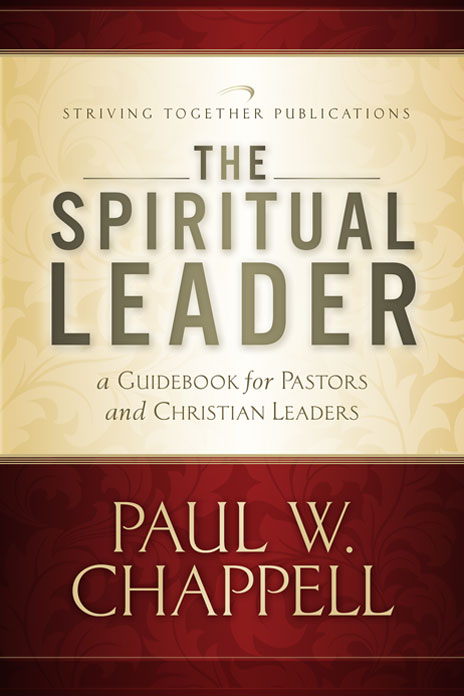
"The Spiritual Leader" by Paul Chappell


From Pastor Paul Chappell comes a very heart-felt book about some of the nuts-and-bolts of ministry. While he is writing as a pastor - and mainly TO pastors - he touches on very broad philosophies and management principles that would be applicable to a wide range of ministry leaders.
 
The chapters are very short and manageable. I read the entire book by reading one chapter each night before I went to sleep. Everything from the ministry team, to the minister's family, to the minister's time management is covered here. And I believe that these lessons come from a man who has tried to humbly and passionately serve the Lord.
 
Pastor Chappell saturates his writing with Scripture, which is crucially important. I remember recently watching a webinar (or something like that) with two pastors of large Baptist churches in Florida. For about an hour I listened to each of them talking about "leadership" principles and church management. They never quoted a Scripture. They never talked about the power of the Word of God, or the necessity of being a Spirit-filled pastor. It was quite discouraging to see how the wisdom of men creeps into the church and drowns out the voice of the Word of God. Pastor Chappell makes no such omissions.
 
The Biblical advice in this book should encourage any pastor, and give them some solid ideas, principles, and guidelines for a healthy, God-centered, and Spirit-led ministry.
 
(This book is available from Striving Together Publications - www.strivingtogether.com)


Saturday, January 25, 2014

"Wounds" by Alton Gansky

"Wounds" is a very emotional book. The story centers around Dr. Ellis Poe, a professor at a small seminary in southern California. Poe is tormented by a memory that he hasn't been able to escape since the event happened almost 30 years ago: witnessing the murder of a high school classmate. Poe was too scared to go to the police. But the fear was quickly replaced by crushing guilt - guilt that he has worn like an enormous burden for nearly three decades.
Meanwhile, homicide detective Carmen Rainmondi is on the trail of a serial killer. The murders have all been bizarre and brutal, with no obvious connections and no useful evidence. Each victim is ruthlessly tortured before death. What's more, the killer appears to be taunting the homicide team. Can Dr. Poe finally put his conscience to rest, and will Detective Rainmondi catch the killer before his grand finale?

I have the utmost respect for our law enforcement officers and investigators. Sure, there are dirty cops just like there are corrupt politicians and hypocrite pastors. But these men and women behind the badge do a tremendous service for our society. (Can you imagine what our nation would be like without them?) Alton Gansky did a great job of painting the law enforcement community as a tight-knit family (not without internal conflict) with a high regard for justice. He also took me inside the tormented mind of the homicide detective: a person who sees the worst crimes but looks beyond the gruesome to find the killers. These behind-the-scenes heroes are often overlooked and under-appreciated.

The main characters were well-developed and fairly realistic, but at times the book took on an almost "dark sitcom" feel. There may have been a tad bit too many lame jokes between cops. (But then again, I'm not a cop. Perhaps they need to have a macabre sense of dry humor in order to keep their sanity intact while viewing mutilated bodies day in and day out... If I ever meet one, I'll ask them.)

It was a very engrossing novel. I could feel the evil emanating from the pages when I was reading about the murders and the killer. My heart ached for the families that learned of their losses. I wanted to give Dr. Poe a hug and tell him that God had forgiven him. These are the kind of emotions and feelings that only great authors can elicit from us. And I believe Alton Gansky is a great author.

I have no major criticisms of this book. The story was over a little too fast (the good ones always are), and I would have liked a little more resolution and closure. However, without the resolution I am left with "tastes" of the book in my mind long after I am finished reading it - instead of merely closing the book, saying "that was good," and promptly forgetting about it. Perhaps that was one of Gansky's objectives? If so, well done, sir. I am still pondering it even though I finished it two days ago.....

Wednesday, December 11, 2013

"The Witness" by Josh McDowell

Josh McDowell has a remarkable testimony. The books that he has written are powerful tools for the Christian who needs answers for skeptics.
I've had the privilege to hear Josh McDowell speak in person, and his winsomeness and speaking ability make it easy to see why his ministry has blossomed so much. He truly has impacted many people around the world for the sake of God's truth.

This is the first fiction book I've read by Josh McDowell (I'm not even sure if he has any others). And, I must say that he did a very good job putting together an enjoyable story.

The main character is Marwan Accad, owner of a Middle-Eastern security company that caters to the ultra-wealthy. When one of Marwan's clients is assassinated, Marwan is framed for the hit. He must find a way to clear his name while keeping one step ahead of those who are now trying to kill him.

Along the way, he is confronted with questions about death, God, and eternity. The answers to these questions remain elusive - until God brings a few unlikely people into his path (as you can probably tell from the silhouette on the cover, he falls in love with one of them).

I enjoyed the story. It was fast-paced and had a lot of action. There was also a very good Gospel message throughout the book, which I love. Even the graphic scenes (and there was some violence and death, as well as some drug usage and immoral encounters) were written very discreetly and tastefully. It is hard for a Christian author to write realistically about the sins of those without Christ and to remain tasteful and gracious, but the author managed to do so.

However, while Josh McDowell certainly is a skilled story-teller, this book was not quite as polished as some of my other favorite thrillers. Sometimes the conversations were a little forced. Sometimes the scene descriptions were over-the-top, and sometimes they were lacking. But all in all, the book was a good read. I would have no trouble recommending it. And the ending may or may not be satisfying to you. (I, personally, was a little bummed at the ending...)

I finished the book in a couple of sittings, so if you are looking for a quick, enjoyable, and Christian thriller - try this one out.

Friday, December 6, 2013

"The Road Ahead" by Paul Chappell

Earlier this year, my wife and I had the opportunity to attend the Spiritual Leadership Conference at Lancaster Baptist Church in California. I had heard a few of Pastor Paul Chappell's recorded sermons, and I had even read one or two of his books. West Coast Baptist College was one of the institutions I had considered attending when I graduated high school.

But to be there at the church was quite an experience. It is very clear that the church has a lot of energy and passion for evangelism and for ministering to their community. The conference was excellent in so many ways! While I was there, I picked up this book (and a few dozen more...).

One thing I've learned about Paul Chappell is that he has an extremely fresh and soundly biblical perspective on ministry. He lies somewhere between old-school fundamentalism and the new breed of independent Baptist churches (such as some of the newer BBF churches - at least, from what I've seen in our neck of the woods). He is very hard to label without strictly defining (or RE-defining) the labels you are trying to stick on him. So, some of what he says in this book may catch you off-guard.

This book is a challenge to - and an honest evaluation of - the independent Baptist movement. He challenges us to shed some of our long-held (but grossly unbiblical, and border-line sinful) ideas about ministry, pastoring, and our relationships to other churches and Christians. It is no secret that the word "fundamentalist" gives us an automatic black-eye in the eyes of some in our culture. How are we to evangelize in such an environment? How can we present the love and grace in the Gospel of our Lord Jesus Christ while so many see the name "Baptist" as indicative of intolerance, bigotry, and hypocrisy? There have been too many preachers filled with anger and pride, and too many moral failures have been covered up and mishandled.

With a strong plea to rally around the unchanging Word of God, Pastor Chappell gives some very helpful advice for independent Baptist pastors as we look to the future of our movement. He also includes some very interesting information on the history of the independent Baptists - some of which I'd read before, but some of it was new to me.

Paul Chappell writes with sincerity, Godly wisdom, and a love for the truth. He also has a passion for the men and women in ministry. This book was encouraging and convicting, stirring and sobering.

If you are (or if you have a friend or loved one who is) a young independent Baptist preacher, who perhaps is wrestling with the idea of being "branded" as one of "those Indie-Fundies", and is considering leaving the movement or dropping "Baptist" in their church's name - this book is a must read. There is hope.

I thank God for men like Paul Chappell who look beyond the idols of personalities and the petty conflicts regarding methodology. Let's get back to the real heart of ministry. Fantastic book.

Tuesday, October 15, 2013

"The Harbinger" by Jonathan Cahn

"The Harbinger" by Jonathan Cahn is supposedly this shocking book revealing how America fits into Bible prophecy. At least, that's what most people who like the book will make you think. I will tell you up front that I did not enjoy the book, nor did I agree with the premise.

Let me begin with my literary criticisms, then I will move on to the Biblical and doctrinal criticisms.

To begin with, I believe Cahn's choice to write this book about his interpretations of Bible prophecy as a fiction narrative was a disaster waiting to happen. The book had no action in it at all (despite the back cover making a comparative reference to the plot being like "a Hollywood thriller"). It was entirely made up of dialogue. And of this dialogue, easily 40% of the sentences were questions.... not GOOD questions, but questions like: "What does that mean?"  "How?"  "They didn't know?"  This made the reading very boring.  The unnamed "prophet" character had an annoying habit of dropping uninformative sentences, to which the main character (a journalist named Nouriel) would ask a clarifying question. It was painfully boring writing.
Here's a made-up example of a conversation between the two, which will serve to illustrate:

Prophet: "They should have known..."
Nouriel: "Who?"
Prophet: "The Israelites. They should have known, but they forgot."
Nouriel: "Forgot what?"
Prophet: "The prophecy."
Nouriel: "What prophecy?"
Prophet: "The prophecy about the tree."
Nouriel: "What tree?"
Prophet: "The tree that fell."
Nouriel: "Fell where?"

This is only the slightest of exaggerations. Much of the book felt like that conversation to me. So it was boring. The characters weren't well developed, and there was very little emotion - really very few "human" elements to the book at all. The author should have either written a better novel, or written this as a non-fiction book on prophecy. This book is repetitive, shallow, anti-climactic, and boring. And that's just my LITERARY opinion!

The story basically revolves around the conversations between Nouriel and the Prophet. The Prophet gives Nouriel nine ancient clay seals with images on them, and he uses the seals and images, along with Isaiah 9:10, to explain how America is supposedly following the same pattern as the ancient Jews. This pattern includes vows, warnings, signs, and judgments.

When you take away the seals and images (which do not actually exist - they are a plot device in the book to introduce the author's points), and the repetition, and the pointless dialogue, the author could have easily made his claims in a 40-page booklet.

I won't take the time to go through all of the book's contents, nor will I dismantle the Biblical errors one-by-one. But I will say that the author goes beyond the bounds of any reasonable hermeneutical principles on several points. The first one being taking that which was prophesied for ISRAEL and applying it to the USA. There is simply no biblical reason to do that. The author says that the founders of America thought they were creating a nation dedicated to God's purpose. But this is in no way comparable to God's actual chosen people, the Jews - nor does it compare to the actual covenant relationship God has with them. (God has no covenant with America, or any other nation for that matter).

The book just did not ring true. The author kept speaking of "ancient mysteries" more than actual prophecies (maybe because he knows in his heart that the PROPHECY was for Israel, not the US?). He also kept speaking of the "vow" of Isaiah 9:10, and how America's political leaders repeated this "vow" - and therefore defied God and invited judgment. I do not believe in magic words. If God is going to judge America (and I think He is already doing that), then it will be because of their rejection of Him and His Christ and His Word - not because they said the magic words of a made-up "vow."

Furthermore, the author made some REALLY HUGE stretches of imagination in order to make his parallel between Isaiah 9:10-11, and America's 9/11 attacks and Wall Street collapse, fit the frame of what he was saying. When you have to twist and contort things in order to make them fit, then you are doing damage to the Word of God.

For example, the Isaiah 9:10 prophecy mentions that a sycamore tree has fallen. Then the author claims that a sycamore tree was destroyed near Ground Zero on 9/11. The problem is, we English speakers just CALL both of these trees sycamores. They are totally different trees! It is equivalent to saying that the ancient prophecy talked about a barracuda, and applying it to a goldfish - because they are both "fish". The author makes these kinds of creative contortions with semantics all throughout the book.

When you strip all of this away, you are left with.....not much, really. There are much better critiques of "The Harbinger" available on the internet. But, please, read things like this with discernment - don't accept everything just because they sell it in the Christian bookstore.

I would NOT recommend this book - either for entertainment reading, or for Bible prophecy study.

Monday, October 7, 2013

"Black Sea Affair" by Don Brown

Special thanks to my sister for giving me this book! ***SPOILER ALERT!!!!****

This is the first book that I've ever read by Don Brown (not to be confused with Dan Brown...). I must say that the story was very gripping. And the cover is really cool.

The story centers around Russian plutonium that is stolen by Chechen terrorists who use it to create a hydrogen bomb. An American submarine is sent on a highly dangerous mission to intercept the freighter that is carrying the plutonium. As tensions between the Russians and the Americans escalate, things go terribly wrong. The US sub commander is arrested and transported to Moscow to appear before a military tribunal on charges of war crimes.

I really liked the pacing of the story. There was plenty of action, and lots of scenes were filled with political maneuvering, personal drama, and military tech/jargon. It definitely wasn't boring at all. There were several characters and story-lines followed for most of the book, so it stayed very interesting.

My biggest problems with the book are:

1. The dialogue was sometimes cheesy.... It is my opinion that conveying "spoken words" is the hardest part of writing fiction - so I am not usually too hard on authors for this. But the US President in the book just said some corny stuff. And almost ALL of the Russian characters had some "corn". (The Russian characters had this annoying habit of referring to everyone by their FULL name - multiple times in the same conversation. "Why do you say that, Nikolai Petrinkov?", and so forth. Maybe this is a part of Russian culture that I am just unaware of. But it got on my nerves a little bit.)

2. The guy that I thought was the main character, the JAG officer representing the sub commander at the tribunal, didn't even show up in the book at all until about 50 pages from the end. SERIOUSLY?!?! He is the first of only two characters mentioned in the description on the back cover of the book, so you would reasonably assume he was the main character, right? Needless to say, we didn't get to know that character well at all before the book ended. Speaking of that....

3. The ending felt hacked off and rushed. There is a difficult balance an author must strike between writing too much after the climax/resolution and hacking the book ending off. I definitely feel Don Brown did the latter. The bomb is intercepted and diffused, the US and Russia make peace, the sub commander and crew are returned home, and the sub commander is reunited with his kids - all in just a couple of pages.

All in all, it was a good book - and I'd definitely read some of Don Brown's other works. 4 out of 5 stars.
(Thanks again, sis!)

Tuesday, October 1, 2013

"What Love is This?" by Dave Hunt

Dave Hunt was a tremendous Bible teacher. He passed away in April of this year (2013). As I read this book, it became clear to me that this man had a passion for the Word of God. The amount of research that went into this book is absolutely astounding. I have read more "technical" theological books that weren't as well-researched and had much shorter bibliographies - and far fewer footnotes. There were literally at least 50 or so footnotes per chapter!

Dave Hunt tackled the sticky problem of Calvinism not in order to start a fight, but to expose the true roots of Calvinism (the Roman Catholic church) and to present the Biblical evidence that shows so strongly against it. After seeing the history of the doctrines of Calvinism, as well as the shockingly evil behaviors and heretical beliefs of a few of it's earliest adherents (John Calvin, Martin Luther, and St. Augustine), one wonders how ANY Bible-believing Christian could call themselves after the name of such heretics.

The sheer volume of verses in the Bible that the Calvinist is forced to re-interpret to fit the points of TULIP should be the first warning. Why not let the Bible speak for itself? Why "wrest" it to say anything? The weakness of the Calvinism framework is clearly exposed. Their web of strange doctrines fails to hold up under scrutiny. Dave Hunt does a SUPERB job of reviewing all 5 points of traditional Calvinism, and demolishing their presuppositions with the plain teaching of Scripture.

He uses HUNDREDS of quotes of prominent Calvinists' own writings in order to accurately represent their beliefs. He also does not shy away from the very tough Scriptures that are favorites of Calvinists to support their views. But, as you can see in this book, even in these tough passages there is NO Biblical support for 5-point Calvinism. This was important to me - because some of these very verses have troubled me for years. Calvinism seemed to lack the ring of truth to me, but these verses were very thorny; and I had no explanation for some of them.

Dave Hunt also took the noble and honorable step of letting some of his Calvinist friends review the early manuscript so they could correct him if he caricatured Calvinism wrongly. He included many of their critiques, and answered them accordingly.

This book is not nearly as technical as "Whosoever Will", which I reviewed here. But the use of Scripture in "What Love is This" was, in my opinion, more compelling than the arguments in "Whosoever Will".

If you have wondered about some of those troubling Bible passages, or if you have not come to a decision about Calvinism, then read Dave Hunt's book. Calvinism will be seen as an atrocious - and blasphemous - heresy.

The only negative is that much of the book is repetitive - because the 5 points of Calvinism are all contingent on each other, so many of the Scriptures and arguments show up in several places. But as a resource, this book is priceless.

I thank God for courageous and godly men like Dave Hunt who teach the Bible with simplicity and power. I pray that God will raise up more men like him.

"Get Connected: Mobilizing Your Church for God's Mission", compiled by Johnny Hunt

I was introduced to this book through a recommendation from a dear friend of mine, Bro. Ed Gibson. He is a man who is challenging the status quo of independent Baptists when it comes to world evangelism. The "traditional" way churches look at Missions has some very distinct flaws, especially in the 21st century. Let's not keep doing what we've always done just because it's what we've always done - let's do what works best to reach people with the Gospel. Brother Ed is leading the charge, in my opinion, for the necessary changes to independent Baptist Missions.

If you are familiar with Johnny Hunt, you know that he is a Southern Baptist pastor. I probably lost a few readers right there - but don't let his affiliation rob you of the chance to learn from this book. Johnny Hunt partners with about 5 other pastors in this book, mostly to share how God has challenged and changed the way their churches looked at world evangelism (yes, beyond even the SBC's "Lottie Moon" offerings). And I am not exaggerating when I tell you that the philosophy of Missions presented in this book is spot on and totally Biblical.

It is not a very long book - a little over 100 pages, I believe. Any church leader or church member who has a passion for world evangelism should read this book. Some of the common themes in the 6 or so stories presented in this book include church members getting PERSONALLY involved in the work of missions, as opposed to merely throwing some money in plate to go to a faceless missionary reaching a forgotten people group. This is how a church will catch fire for Missions - when the PEOPLE begin to fulfill the Great Commission themselves, instead of literally paying other people to do it for them.

Those words sound harsh, but that is about the extent of any sort of strategy in the average independent Baptist church: The pastor has a few college buddies that are missionaries - so he invites them to come present their ministry, the church takes them on for support, and the missionary sends a letter every few months talking about their broken down car and MAYBE a few conversions here and there. I'm being very harsh, but also realistic.

WHERE IS THE STRATEGY???? The Great Commission is the most serious task that Christ left to the church! How can we be satisfied with ourselves? What happened to CHURCHES having the burden for world evangelism, instead of a few (and getting fewer) full-time missionaries having the burden and having to BEG churches to support them? Meanwhile, this family will spend probably 5 years and close to $250,000 on deputation (rough estimate of average) BEFORE THEY WILL EVEN GET TO THEIR FIELD!

We can do better than this! We MUST do better than this! This book does not have all the answers, but it definitely will help you start thinking in the right direction.

I read this book, then my pastor read it, then we gave it to all our Missions Committee members and deacons. Our church is seeing the change of mindset already. We have a long way to go, but we are making real progress.

Please, read this book. It may help you see your part in the Great Commission a little more clearly.

If you would like to have a thought-provoking speaker at your church's next Missions Conference, I would highly recommend Bro. Ed Gibson. Email me, or contact me through Google+, and I'll get you his contact info.

Thursday, May 23, 2013

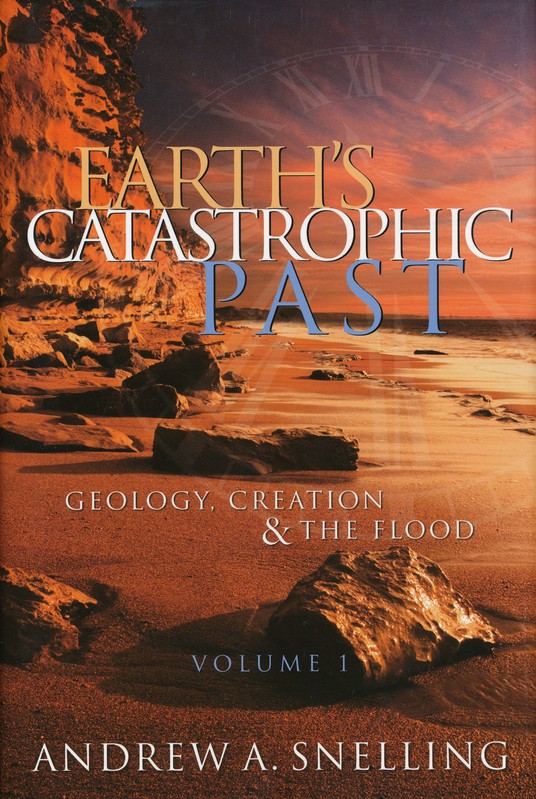
"Earth's Catastrophic Past: Volume 1" by Andrew Snelling

Special thanks to Bro. Paul Lowe for loaning me this book!

I have long had a keen interest in the realm of the Creation/evolution controversy. As far back as I can remember, my parents were watching videos and reading books with me about the dinosaurs, the flood, Creation, and evolution. We attended several presentations and debates on the subject in my younger years.
I'm not sure why this fascination is in me.... I have a whole shelf full of books on the subject, and dozens of videos.

Anyway, so I wasn't dreading the task of reading this book - even though I knew it would be highly technical in some parts. This first of two volumes written by Andrew Snelling is a very thorough introduction to the scientific feasibility studies of Noah's Flood (more appropriately, the Genesis Flood). The first 200 pages are not terribly technical, and I believe most Christians would be greatly blessed and have their faith strengthened by reading this book (and other good books on the subject - send me a message if you would like some recommendations).

While the book is too lengthy to provide a point-by-point review, I will say that the author answered some questions about the Flood that I had never even thought about. Numerous possible critiques that could be used by skeptics are thoroughly covered here.

Let's be honest... many times as Christians we are guilty of merely blindly accepting what the Bible says... While we SHOULD believe the Bible as legitimate, accurate, and trustworthy history (even if we don't completely understand it), nowhere does God ever tell us not to try to figure out how things possibly took place. This book makes a very bold attempt in that regard.

One of the best parts of the book was the walk-through of the first few chapters of Genesis. It was like a bit of a scientific Biblical commentary - very interesting. The last 150 pages or so, however, were so technical in the geologist's language that I had no choice but to "skim" those pages for nuggets of truth. There was just no way I could comprehend all of the terminology and calculations that are peculiar to the field of geology.

I've been told that volume 2 is even better... We shall see. But don't expect that review any time soon... It took me several months to finish THIS volume!

Please visit these excellent websites for more info on this subject:
http://www.icr.org/
http://www.answersingenesis.org/
http://www.equip.org/